Early Math Assessment @ School
A research-informed universal numeracy screener for Kindergarten through Grade 4, designed for school board and Ministry-level implementation. Developed by researchers at the Math Lab at Carleton University.
SSO with Microsoft & Google API & Power BI Integration ยท Multilingual Support
Digital EMA@School is designed for school board and Ministry-level implementations that scale across hundreds of schools while giving every teacher the data they need at the classroom level.
Province-wide numeracy screening with centralized data, benchmarking, and norm-setting. Deploy across all districts with SSO integration comprehensive analytics.
Board-wide screening across all Kโ4 classrooms with centralized reporting, SSO integration with your existing Microsoft or Google identity provider and data exports that plug directly into your analytics tools.
School-level dashboards give principals and leads a clear view of numeracy performance across all classrooms, enabling data-driven decisions about intervention resources and support.
Rich, item-level data that tells you exactly which skills each student has mastered and where they need support so you can plan targeted instruction with confidence.
Digital EMA@School (Early Math Assessment @ School) is a research-informed universal numeracy screener for students in Kindergarten through Grade 4. It was developed by researchers in the Math Lab at Carleton University, Dr. Heather Douglas and Dr. Jo-Anne LeFevre, and is grounded in over 20 years of research in mathematical cognition and cognitive development.
Originally created in 2021 by Carleton University researchers in paper-based format, Digital EMA@School has been successfully used across numerous Canadian schools. In 2024, Carleton University and Vretta partnered to digitize and extend implementation at large scale.
Foundational early mathematical skills include Number Knowledge, Number Relations, and Number Operations. Digital EMA@School includes tasks in each of these subdomains. Although skills in each subdomain are related, each predicts mathematics separately and thus can provide broad insights into children's number skill development.
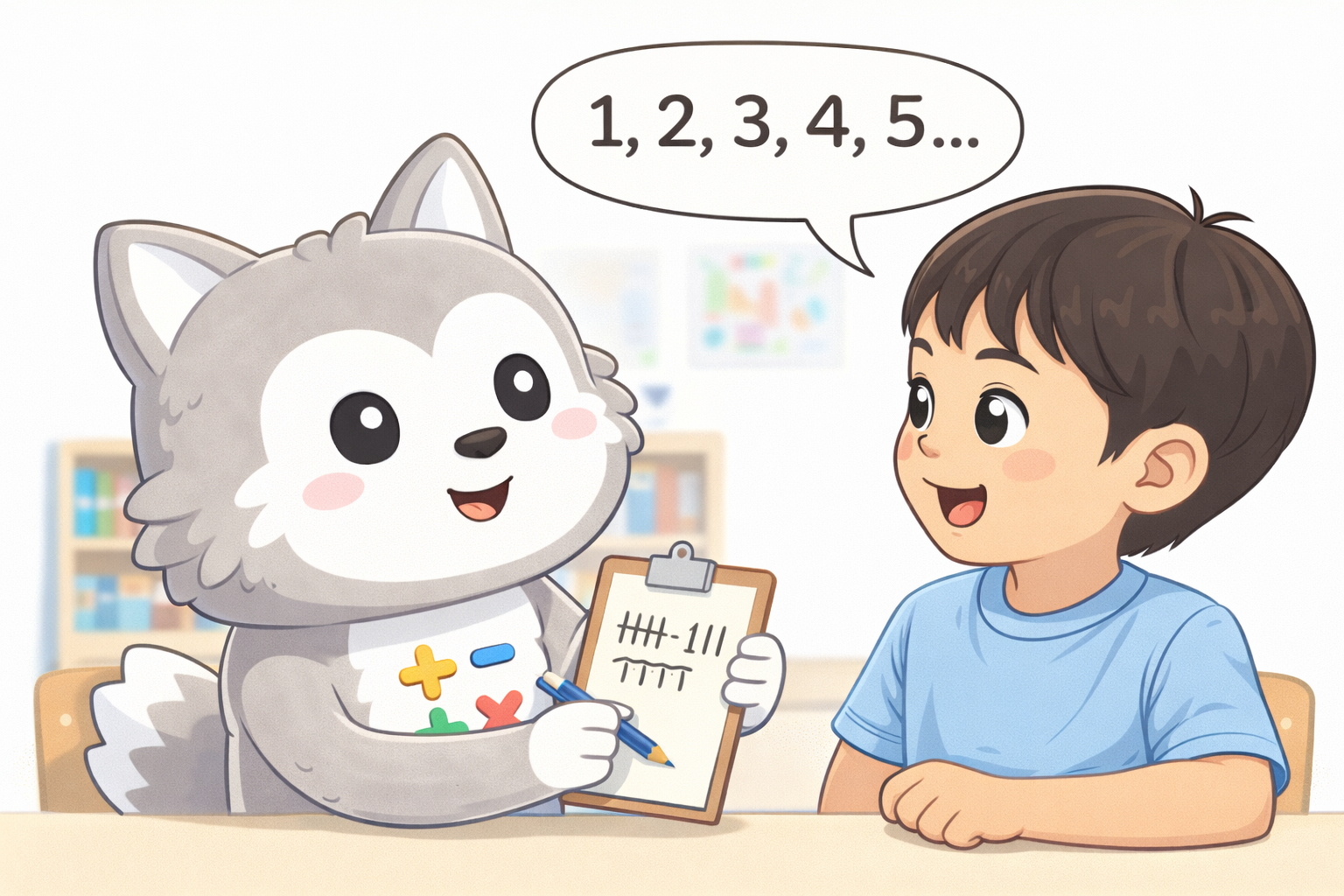
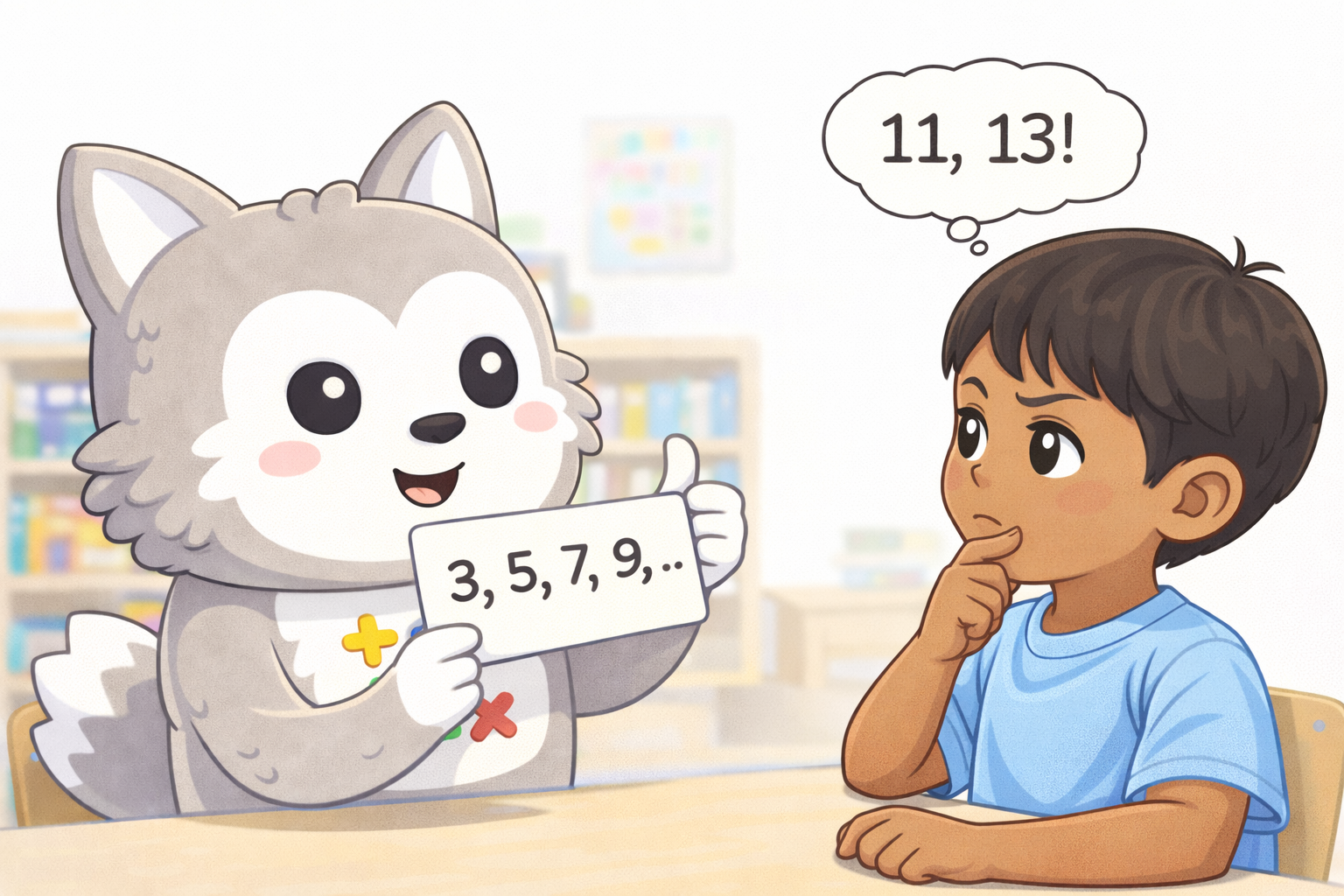
Digital EMA@School measures foundational numeracy across three subdomains. Here's a glimpse of what the assessment looks like for students, guided by Nano, the math-wolf.
Students count aloud in sequence while Nano listens encouragingly. This measures knowledge of the counting sequence, a foundation that underpins all numerical reasoning.
Number Knowledge
Nano models a number pattern and the student extends it. This captures pattern recognition and the ability to infer rules, skills predictive of later mathematical reasoning. Number Relations
Number RelationsCounting, numeral recognition, and number concepts.
Verbal Counting ยท Dot Counting ยท Next Numbers ยท Number Naming ยท Number Writing
Comparisons, ordering, and pattern recognition.
Number Comparison ยท Next Numbers ยท Equation Equivalence
Arithmetic fluency and problem-solving.
Addition ยท Subtraction ยท Multiply/Divide ยท Calculations
Kindergarten through Grade 4: Each grade has age-appropriate tasks and scoring.
Digital EMA@School is built to fit seamlessly into your existing technology infrastructure, from identity management to data analytics.
Integrate with your existing identity provider for frictionless access. Teachers and administrators sign in with the credentials they already use โ no separate accounts needed.
Programmatic access to assessment data for integration with your existing student information systems, data warehouses, and analytics platforms.
Connect assessment data directly to Power BI and other business intelligence tools to build custom dashboards tailored to your board or Ministry's reporting needs.
Our integrations are built for school board and Ministry-level implementations. Whether you're deploying across 10 schools or 1,000, the platform is designed to scale with your infrastructure, including automated rostering, centralized access management, and data flows that connect to your existing systems.
Results available immediately after students complete the assessment. No manual scoring needed, freeing teacher time for instruction.
Skills measured are building blocks that research shows are predictive of advanced mathematical thinking and longer-term development.
Available in multiple languages to support diverse student populations and ensure accessibility across different communities.
Reports at student, class, school, and board levels, from item-by-item teacher insights to system-wide analytics for decision-makers.
Can be administered by classroom teachers in group settings or completed independently by students, with three assessment windows per year.
Grounded in over 20 years of research in mathematical cognition and cognitive development, validated across Canadian schools.
Whether you're a school board exploring a district-wide rollout or a Ministry planning a provincial implementation, we'll work with your team to integrate seamlessly with your infrastructure.
SSO API ยท Power BI ยท Professional Development ยท Ongoing Support